
Authorization
To perform the first run after installation, use the administrator module. To do this, in the browser search bar, enter the address http://<IP-orchestrator-server>/admin/.
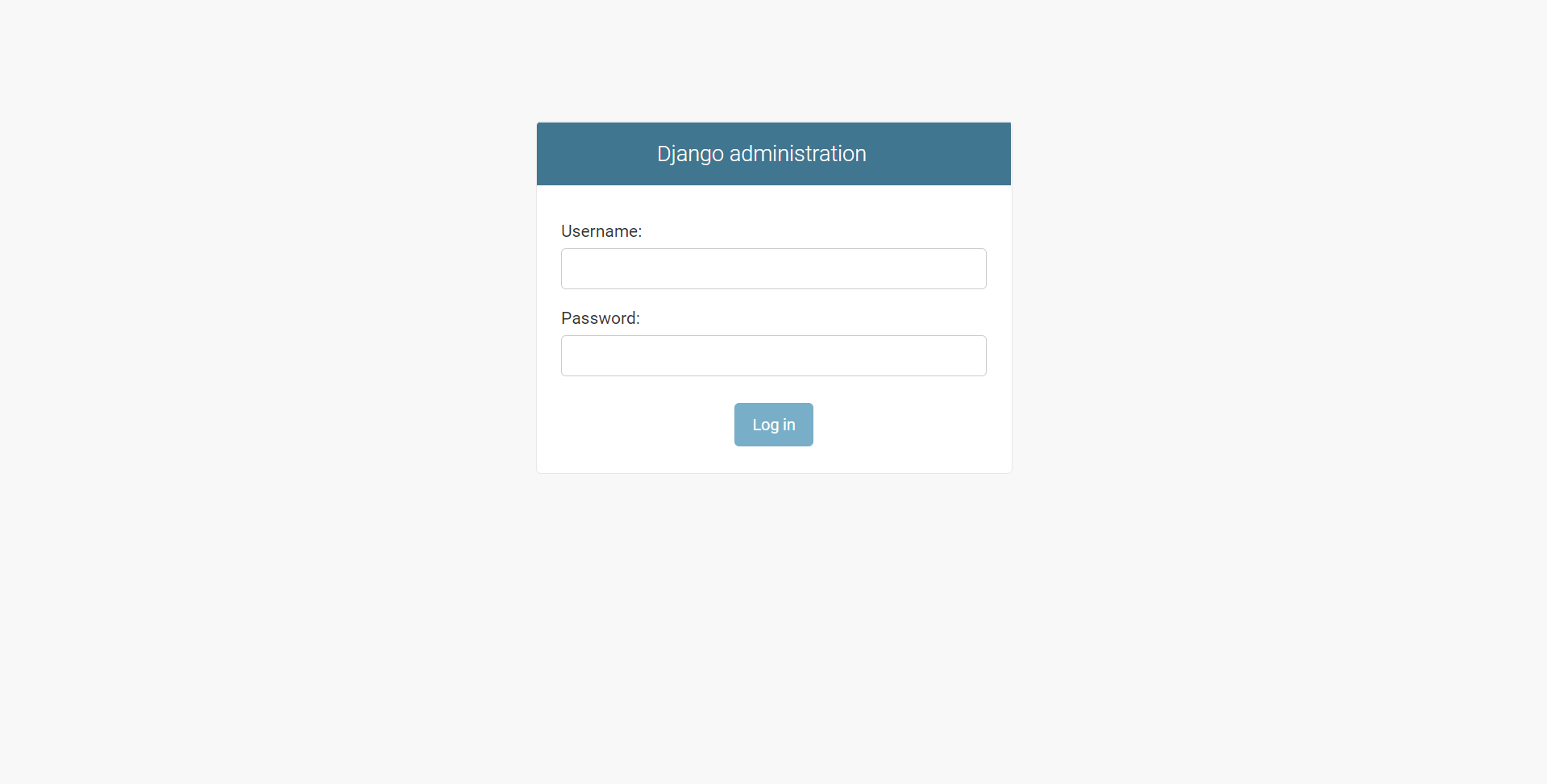
Enter your login and password and Log in.
Step 1. Case types
The Case types page contains types of available analytics.
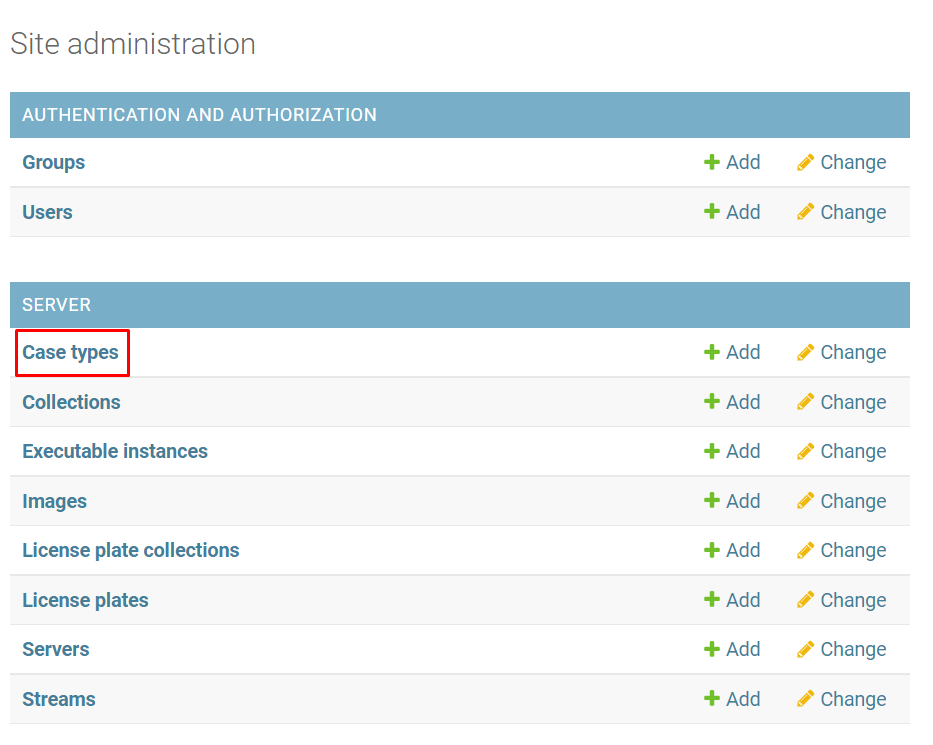
Available types of analytics:
-
loud-sounds, detection of loud sounds
-
line-intersection, detection of line intersection
-
smoke-fire, detection of smoke/fire
-
camera-obstacle, detection of camera damage/blockage/vandalism
-
visitors-counting, detection of visitors
-
licplate-recognition, license plate recognition
-
person-counting, detection of people in the area
-
motion-detect, motion detection
-
face-recognition, face recognition
These types of analytics are loaded automatically. You just need to make sure that the required types of analytics are present.
Add an analytics type
To add an analytics type, select Add.
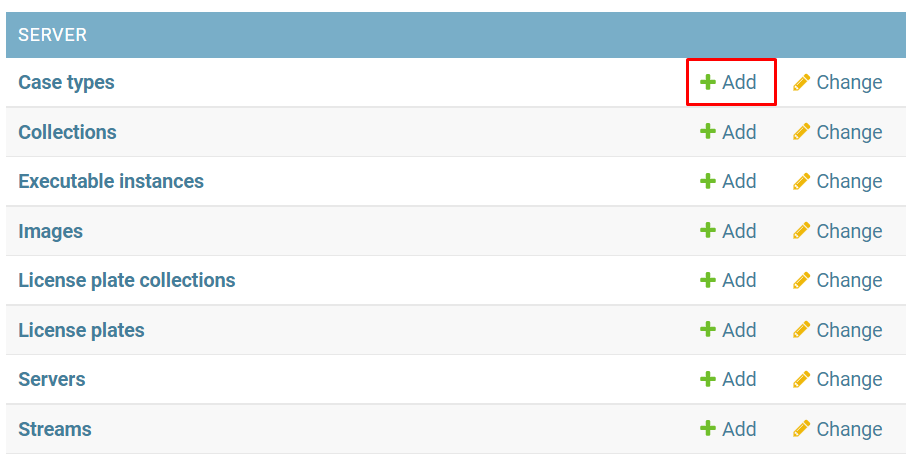
In the opened window:
-
Enter the name of the analytics type in the Name field:
-
loud-sounds
-
line-intersection
-
smoke-fire
-
camera-obstacle
-
visitors-counting
-
licplate-recognition
-
person-counting
-
motion-detect
-
face-recognition
-
-
Repeat the name of the analytics type in the Field name field.
-
If necessary for image vectorization, select the Use images checkbox for the Face recognition analytics type.
-
Complete by selecting Save.
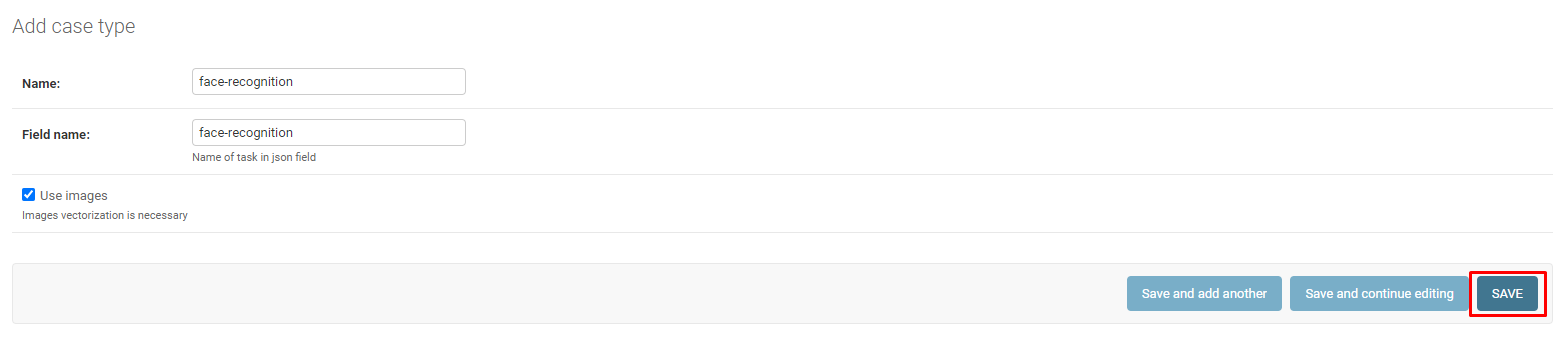
Select:
-
Save and add another to add another analytics type after saving the current one. In this case, a new addition window will open.
-
Save and continue editing to open the editing window for this analytics type after saving.
Step 2. Servers
The Servers page contains available servers where so-called executable files (Binary nodes) are running.
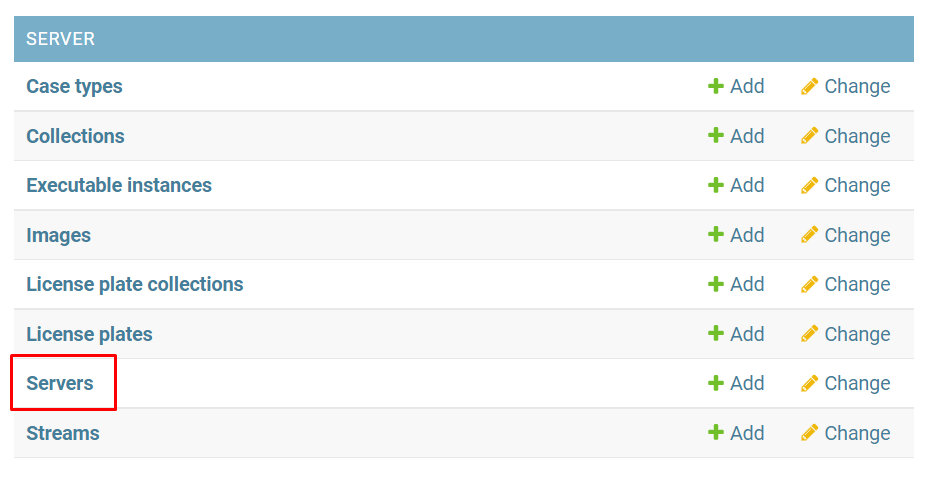
Add a new server
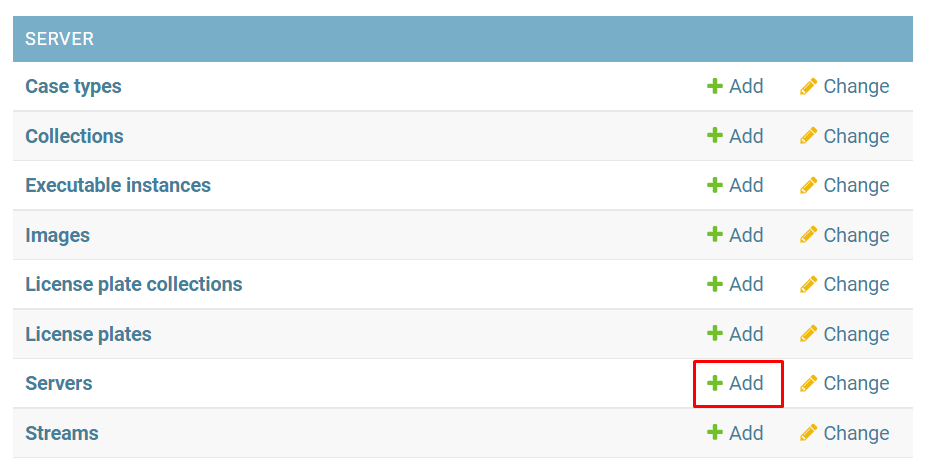
To add a server, select Add.
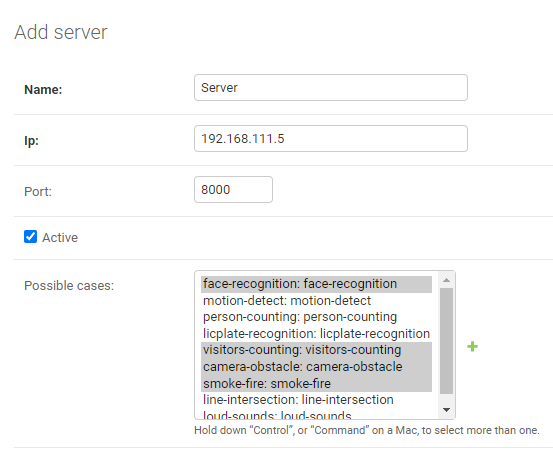
In the opened window:
-
Enter the name of the server in the Name field.
-
In the IP field, enter the IP address of the server.
-
Enter the port on which the orchestrator client is running (by default, 8000).
-
If necessary, select the Active checkbox (if not selected, tasks for processing analytics will not be sent to this server).
-
The Possible cases field contains all analytics types added in Case types by default. To specify which analytics types the server needs to process, select them with the mouse or using the Ctrl (Command on Mac) + left mouse button shortcut. To add a new analytics type, click on the add icon to the right of the field ➕.
-
Complete the addition by clicking Save.

Select
-
Save and add another to add another server after saving the current one. In this case, a new addition window will open.
-
Save and continue editing to open the editing window for this analytics type after saving.